Dental Implants / Teeth Implants
At Bharati Dental Hospital, we use advanced technology to deliver dental treatments that are precise, efficient, and patient-friendly. Our approach focuses on enhancing comfort while ensuring effective outcomes through modern dental care solutions.
Introduction
What is dental implant?
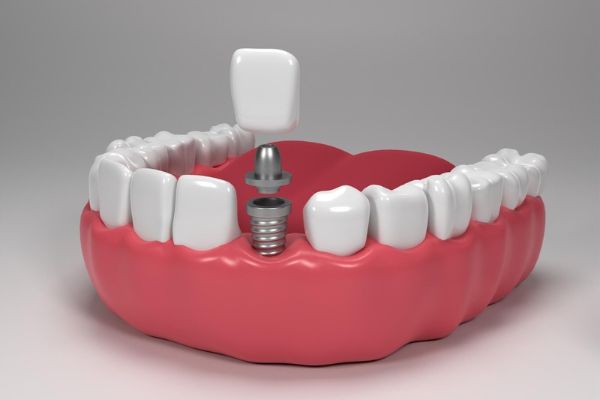
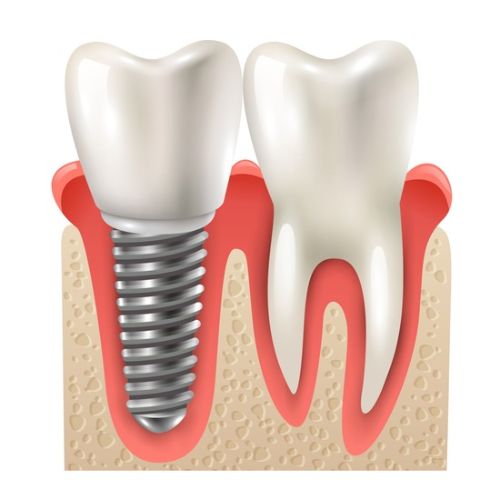
Dental implants involve replacing or restoring the root of a tooth that is missing or has broken. Visit Bharati Dental Hospital to get expert guidance and surgical care for a dental implant. We assure you to provide the necessary hand-holding right from the first consultation to the completion of the treatment procedure.
Benefits
How is dental implant done?
Step 1: The Consultation & Digital Mapping
Every successful implant starts with a plan. We use Digital X-rays or 3D Cone Beam (CBCT) scans to assess your bone density and locate nerves and sinuses. This allows us to map out the exact position where the implant will be placed.
Step 2: Preparing the Foundation
If the missing tooth is still present, it is gently extracted. In some cases, if the jawbone is too thin to support an implant, a bone graft may be performed first to create a solid base. If your bone is healthy and strong, we can often move straight to the next step.
Step 3: Placing the Implant
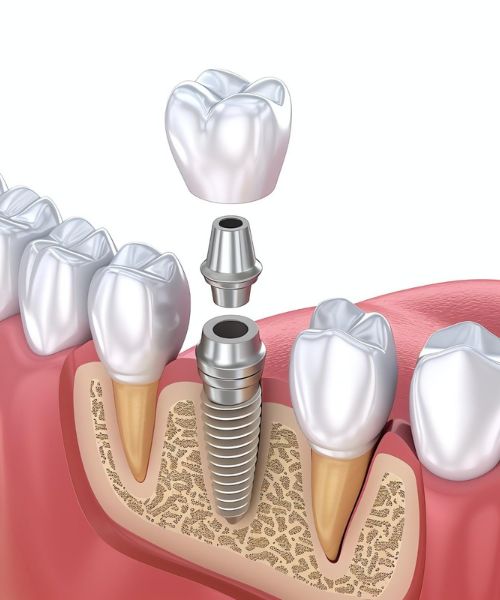
During a minor surgical procedure, the dentist places a small titanium post into the jawbone. Comfort First: You will be under local anesthesia or sedation, so you won’t feel pain during the procedure. The Goal: This titanium post acts as an artificial root. Because titanium is “biocompatible,” your body won’t reject it.
Step 4: Osseointegration
This is the most critical stage. Over the next 3 to 6 months, your jawbone actually grows around the implant and fuses with it. This process, called osseointegration, is what makes an implant so strong. The implant then becomes a permanent part of your anatomy.
Step 5: Attaching the Abutment
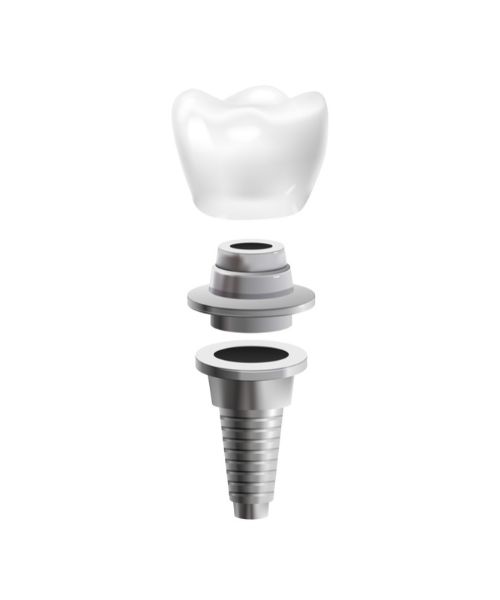
Once the implant is securely fused to the bone, a small connector piece called an abutment is placed on top of the post. This piece acts as the “anchor” that will eventually hold your new tooth. In some cases, the abutment is placed at the same time as the implant.
Step 6: Crafting and Placing Your Custom Crown
Once your gums have healed around the abutment, we take a final impression of your mouth. A dental lab creates a custom porcelain crown that matches the exact shape and shade of your surrounding teeth. This crown is then screwed or cemented onto the abutment.
Benefits of dental implants
- One of the key benefits of dental implants is that it makes the patient feel more confident, relaxed and secure.
- The chances of any bone or gum loss are eliminated when there’s a dental implant done.
- The dental implants we use for our patients at Bharati Dental Hospital are designed to give a completely natural look to the patient.
- The patient may suffer tooth decay and deposition of plaque and bacteria that in turn cause cavities. This can be prevented with the help of dental implants.
- When there is tooth loss in a patient that leads to deterioration of jawbone. To prevent that a dental implant is recommended to keep the jawbone intact.
- Gaps in the teeth can have an impact on the way a person speaks. Implants enable one to speak in a more natural way and feel confident in social settings.
- With dental implants one can enjoy eating and chewing their favourite foods easily.
Dental implants thus have a positive impact on one’s oral health and overall emotional health.
Post-Operative Care Dental Implants
The First 24- Hours
Protecting the blood clot: The first day protecting the blood clot is absolutely necessary for beginning your healing process. For that, you need to avoid spitting, rinsing or drinking water or any liquids including fruit juices or coconut water using a straw.
Controlling the bleeding: Keep firm pressure on the gauze pad for 30–60 minutes. If bleeding persists, replace the gauze or bite on a damp tea bag (the tannic acid helps stop bleeding).
Keep it Cool: Apply an ice pack to the outside of your face (20 minutes on, 20 minutes off) to reduce swelling and bruising.
Rest: Avoid any physical exertion. Keep your head elevated with an extra pillow when lying down.
Managing your pain
Don’t wait for the numbness to wear off before taking your first dose of prescribed pain relief. If antibiotics were prescribed, finish the entire course even if you feel fine, as this prevents infection around the new implant.
Cleaning Your Mouth
Day 1: Do not brush the surgical area. However, you should brush your other teeth very gently.
Day 2 onwards: Gently rinse with warm salt water (1/2 teaspoon salt in a cup of water) 3–4 times a day, especially after eating, to keep the site clean.
Foods to eat & avoid
Your new implant needs a “no-stress” environment while it stabilizes in the bone.
Initial Phase
Stick to cool liquids and very soft foods like dalia, curd, pudding, and lukewarm blended soups.
Gradual Transition
Once the initial soreness fades, you can move to "fork-tender" foods like scrambled eggs, mashed potatoes, and soft pasta.
What to Avoid
Stay away from hard, crunchy, or spicy foods (like chips or nuts) and sticky snacks that may get stuck.