Dental Bridges
Restore your smile and regain full function with custom dental bridges at Bharati Dental Hospital. Our treatments are designed to replace missing teeth seamlessly, helping you eat, speak, and smile with confidence.
Introduction
What is a dental bridge?
A dental bridge is a custom-made restoration used to replace one or more missing teeth. Just like a bridge over a river, this dental appliance “spans the gap” left by missing teeth, anchoring itself to the healthy teeth on either side.
A dental bridge not only restores the appearance of your smile but also helps maintain proper bite alignment and prevents surrounding teeth from shifting. By filling the gap effectively, it supports better oral function and contributes to long-term dental health.
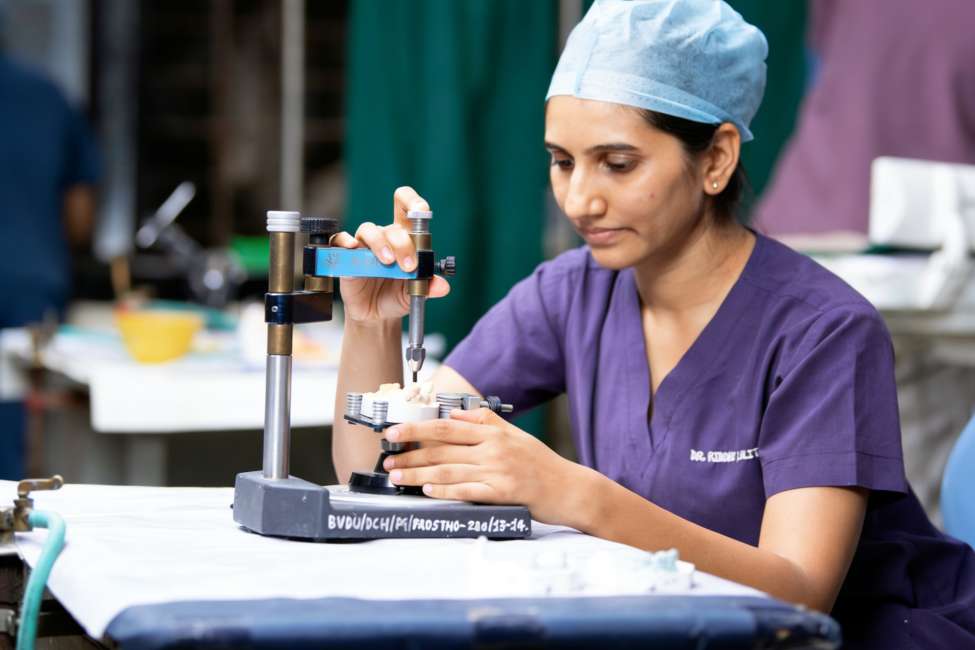
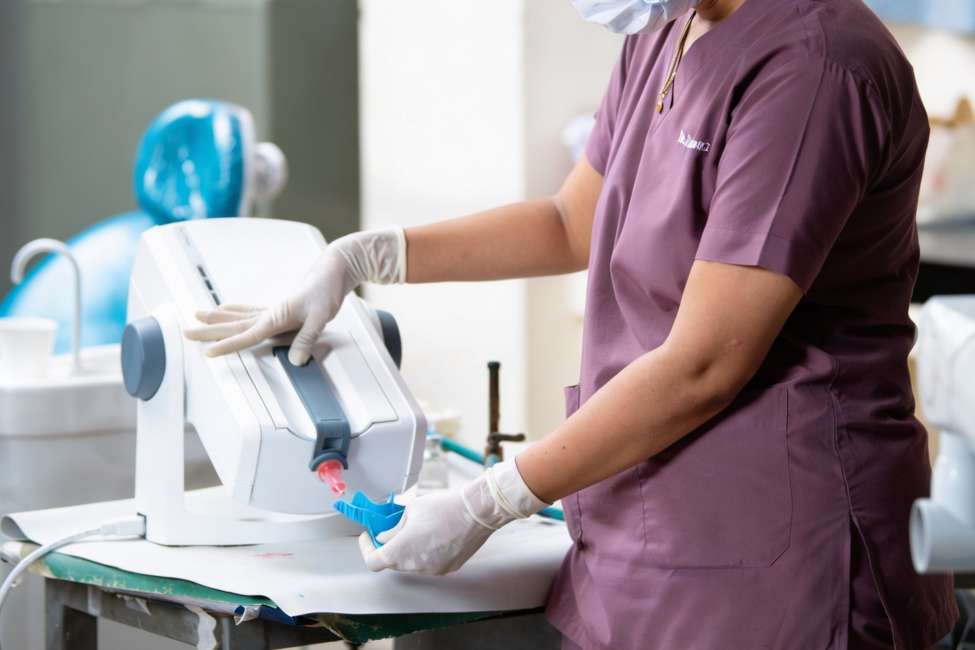
Why Consider a Dental Bridge?
Replacing missing teeth is about more than just aesthetics. A bridge helps you:
- Restore Chewing & Speech: Eat comfortably and speak clearly without gaps.
- Maintain Face Shape: Prevent the “sunken” look that can occur with tooth loss.
- Protect Your Alignment: Stop your remaining natural teeth from shifting out of place.
Our Prosthodontists decide the type of bridge patients would require depending on their age, size of the gap between teeth, the number of missing teeth, the present condition of the teeth that are next to the impacted teeth etc.
The Anatomy of a Dental Bridge
Every bridge is a personalized unit consisting of two essential parts:
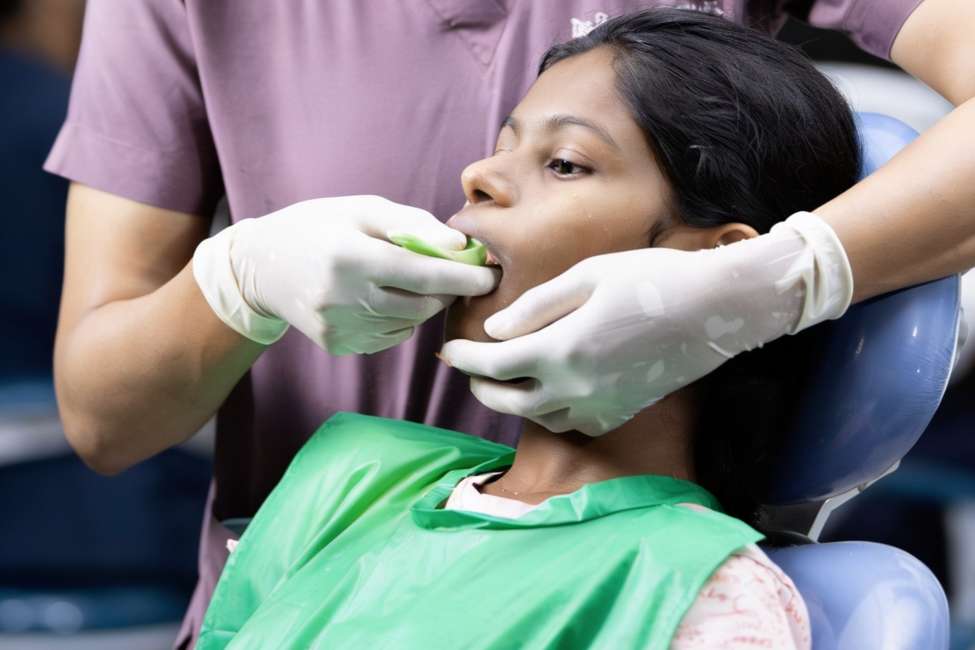
1. The Abutments (The Anchors)
These are the support structures at each end of the bridge.
Natural Support: Usually, your existing teeth are reshaped to hold the bridge in place.
Implant Support: In some cases, tiny titanium posts (implants) act as the anchors if natural teeth aren’t available.
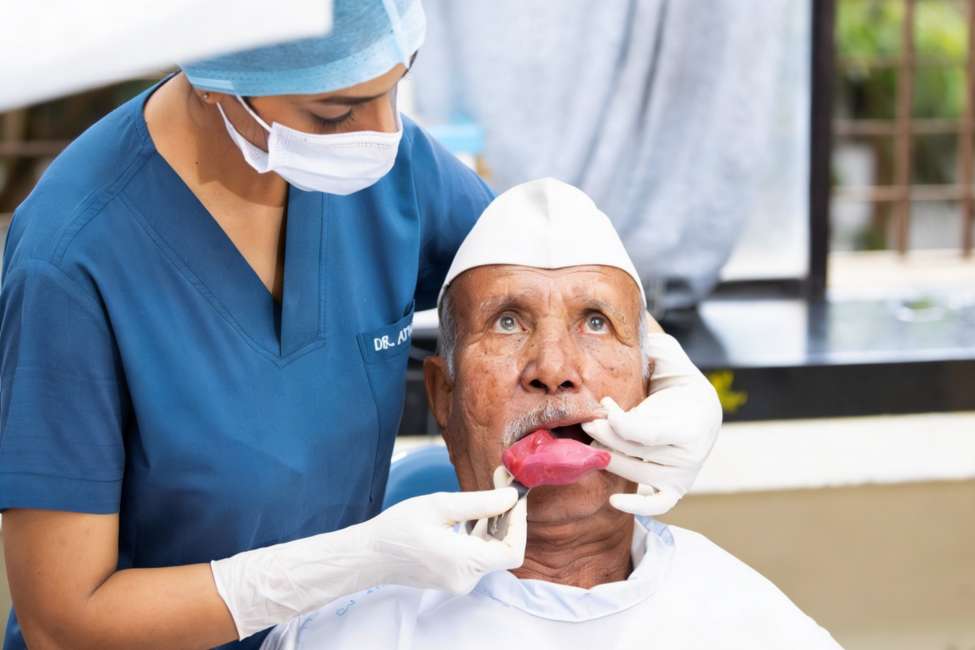
2. The Pontics (The New Teeth)
These are the high-quality artificial teeth that fill the empty space.
Custom-Made: They are color-matched and shaped to blend seamlessly with your natural smile.
Durable Materials: Typically crafted from porcelain or ceramic for a lifelike look and feel.
Benefits
Why Choose Laser Treatment?
Minimized Discomfort
Because the laser is so gentle, many procedures can be performed with little to no local anesthesia. You can often say goodbye to the ‘numb lip’ feeling after your appointment.
Reduced Bleeding & Swelling
The laser light naturally seals blood vessels and nerve endings as it works. This means almost no bleeding during the procedure and much less swelling afterward.
Faster Healing Times
Lasers are minimally invasive, so by preserving more of your healthy natural tissue and stimulating the body’s natural repair process, your healing is speedened up faster than with traditional methods.
Quiet & Vibration-Free
For patients who feel anxious about the sound or vibration of a dental drill, the laser provides a quiet, stress-free alternative.
Higher Precision
Our Novolase Gold Laser allows our specialists to target the exact area of decay or infection with pinpoint accuracy, leaving surrounding healthy teeth and gums completely untouched.
Step 1: Clinical Assessment & Preparation
Our dental experts first carry out a detailed evaluation of your condition. They use digital radiographs (X-rays) and clinical exams to ensure your supporting teeth and gums are healthy. If any underlying issues like decay are found, those issues are treated first to create a stable foundation.
Step 2: Shaping the Support Teeth
To ensure the bridge fits perfectly, the anchor teeth (abutments) on either side of the gap are carefully reshaped. We remove a small amount of enamel to make room for the crowns that will hold the bridge in place.
Step 3: Digital Impressions & Temporary Care
Our creative team delivers stunning graphic designs, from logos and brand identity to marketing materials and social media graphics.
Step 4: The Final Fitting
During your final visit, we remove the temporary bridge and check the fit, color, and bite of your permanent one. After ensuring everything is perfect, we use high-strength dental cement to securely bond the bridge into place, instantly restoring your smile’s function and beauty.
Pros and Cons of Dental Bridges
Dental bridges aren’t just meant to improve one’s smile and appearance. This is an outline of the practical pros and cons of dental bridges, along with essential maintenance tips for long-lasting results.
Pros
- Improved oral functions – Dental bridges provide a durable, high-strength solution that restores full biting and chewing power, allowing you to enjoy your favorite foods again. By filling the gaps in your smile, bridges also eliminate speech issues like lisps, helping you speak with confidence.
- Balanced and stronger bite – The loss of even a single tooth impacts the bite’s natural balance, forcing the remaining teeth to endure excessive, damaging pressure. This misalignment can lead to structural dental wear and painful jaw disorders. A dental bridge balances your bite and protects your jaw from uneven pressure and pain by filling the gap.
- An improved smile – People who suffer tooth loss, tend to avoid smiling, communicating or even socializing. Dental bridges act as replacements that are designed to match the other teeth thus also improving your smile.
Cons
- Risk of Decay – Because the bridge is anchored by crowns on your natural teeth, it can be trickier to clean those areas. If plaque builds up at the “seam” where the crown meets the tooth, cavities can form underneath.
- Gum Health – If food particles get trapped under the bridge, it can irritate the gums. Without thorough cleaning, this can lead to redness (gingivitis) or more serious gum disease.
- Potential for Damage – Bridges are strong, but they aren’t indestructible. In some cases, biting on very hard objects or ice can cause the porcelain to crack or the supporting teeth to fracture.
Post-Operative Care Dental Bridge
A well-cared-for bridge can last for many years. Follow these “Golden Rules” for oral hygiene:
Master the Clean
Brush twice daily and use superfloss or interdental brushes to clean the hard-to-reach space underneath the artificial tooth.
Pick the Right Products
Use a non-abrasive fluoride toothpaste to protect the enamel of your anchor teeth without scratching the bridge material.
Mind Your Diet
Avoid biting down on ice, hard candies, or extremely sticky foods that could dislodge or crack the porcelain.
Routine Professional Care
Visit us every six months for a clinical assessment and professional cleaning to ensure the bridge remains secure.